Juicy Air-Fryer Roast Beef with a Garlic Herb Crust
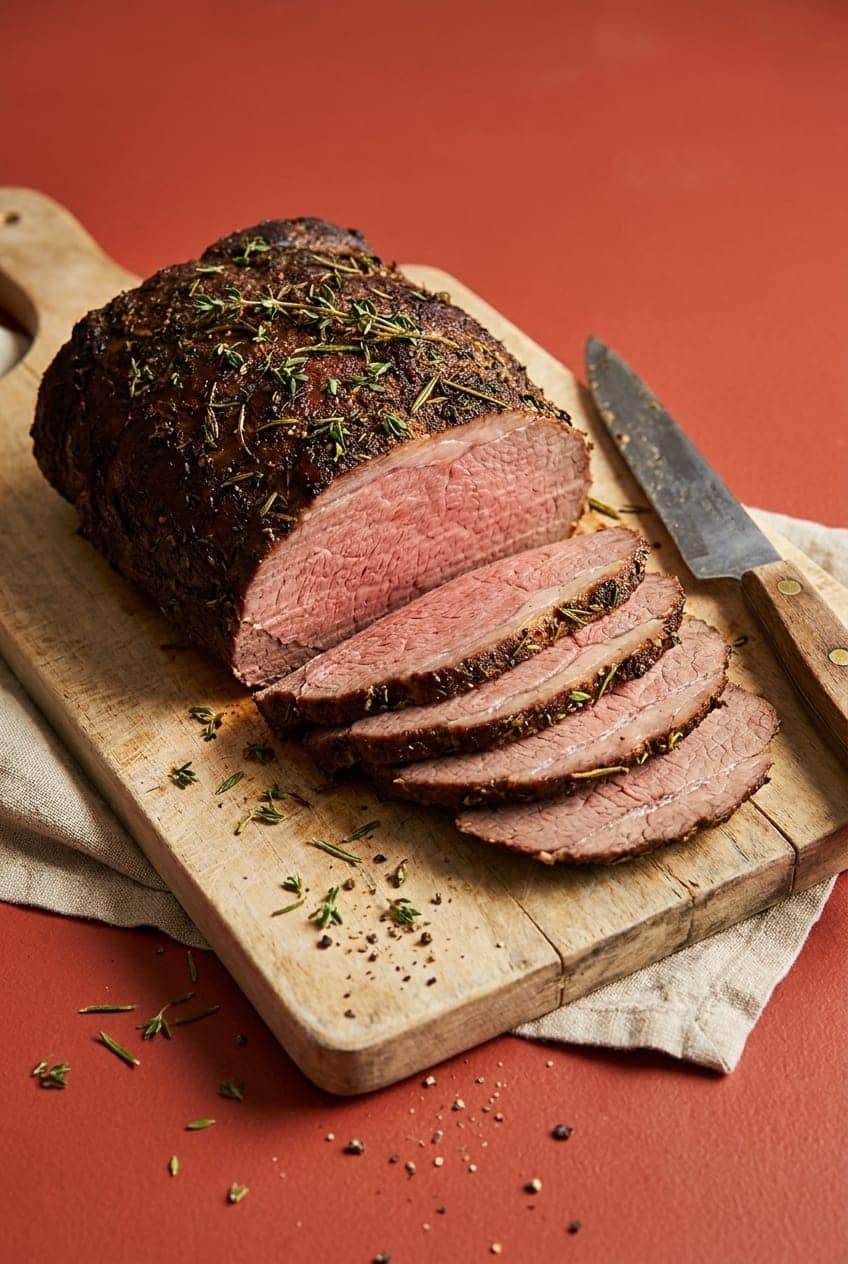
Roast beef feels like a thing you make for company, which is exactly why I almost never made it. Then I started buying eye of round, which is one of the cheapest cuts sitting in the case, and cooking it in the basket instead of heating the oven for an hour. Five minutes of work: dry it off, rub it with oil and a fistful of dried herbs, and let it sear hard before it roasts gently. The only real skill is knowing when to stop, and a thermometer does that for you. Pull it at 130, let it rest while you sort out everything else, and slice it thin against the grain. What you get is a proper roast on a weeknight, and enough left over to make the best sandwich of the week tomorrow.
Why this one is so easy
Eye of round is one of the cheapest things at the meat counter, and treated right it slices like a proper roast. This is a Sunday dinner on a Tuesday budget.
The air fryer sears hard at 400F and then roasts gently, so you get the dark crust without heating an oven for an hour in the middle of summer.
Five minutes of actual work. The rub goes on, the basket does the rest, and the only skill involved is owning a thermometer.
Leftovers are the quiet win. Cold, sliced thin, they make the best sandwich of the week.
Della's tips
Buy the thermometer. A lean roast has a narrow window between rosy and gray, and there is no way to see it from the outside.
Take the roast out of the fridge while you make the rub. Twenty minutes on the counter helps it cook evenly from edge to middle.
Check whether your roast fits before you buy it. A 2 pound eye of round is compact, but a wider cut may need to be cut in half to sit flat in the basket.
Slice thin, always across the grain. Thick slices of a lean cut go chewy no matter how well you cooked it.
Save the juices that collect under the foil and spoon them over the sliced meat. That is the whole gravy, and it takes no effort.
Make it your own
+ Peppercorn crust: swap the black pepper for a tablespoon of coarsely cracked peppercorns pressed all over.
+ Horseradish night: serve with a quick sauce of sour cream, prepared horseradish, and a squeeze of lemon.
+ French dip: pile the thin slices into a toasted roll with melted provolone and the pan juices for dipping.
+ Different cut: a top round or a small sirloin tip roast behaves the same way, same temperatures, same pull point.
If you are out of something
No mustard powder? Leave it out, or use a teaspoon of Dijon worked into the oil instead.
Fresh herbs work: use a tablespoon each of chopped rosemary and thyme in place of the dried.
Out of onion powder? A little more garlic powder covers it.
Roast beef is one of the few dinners that is arguably better the next day. Cool it whole, wrap it, and it keeps 4 days in the fridge, then slice it cold and paper thin for sandwiches. If you want it warm again, do not put slices back in the basket, they overcook in seconds. Warm them gently in a little beef broth on the stove instead. You can also rub the roast the night before and leave it uncovered in the fridge, which dries the surface and gives you an even better crust.
Ingredients
Steps
Pat the roast dry all over. Really dry. A wet surface steams instead of browning, and the crust is half the reason to make this.
Rub the whole thing with olive oil, then mix the salt, pepper, garlic powder, thyme, rosemary, onion powder, and mustard powder and press the mix into every side. Do not be shy, a lean cut needs the seasoning on the outside because there is nothing marbled going on inside.
Preheat to 400F. Put the roast in fat side up if it has one, and cook 12 minutes. This is the searing stage, it builds the dark crust that a low slow roast never gets.
Turn the roast over, drop the temperature to 350F, and cook another 25 to 30 minutes. Start checking at 20 with an instant read thermometer in the thickest part.
Pull it at 130F for a rosy middle. It climbs about 5 degrees while it rests, so 130 out of the basket lands around 135. If you like it closer to medium, take it to 138 and let it finish at 145.
Tent it loosely with foil and leave it alone for 15 minutes. This is not optional. Cut it early and the juice runs onto the board instead of staying in the meat.
Slice it as thin as you can manage, across the grain. Eye of round is lean, and thin slicing against the grain is what makes it tender instead of chewy.
Quick note: I am a home cook, not a dietitian. Treat any nutrition info as a rough estimate, and if allergies are at your table, double check your ingredient labels.
This one is part of my 51 Easy Air-Fryer Dinners for Busy Weeknights roundup. If tonight's dinner worked out, the other ones are just as lazy.
You might also like
Questions, answered
For a 2 pound eye of round, about 12 minutes at 400F to sear, then 25 to 30 minutes at 350F. Go by the thermometer rather than the clock, because roast shape matters more than weight.
Pull it at 130F for a rosy middle, 138F if you want it closer to medium. It rises about 5 degrees during the rest, so the number you pull at is not the number you eat at.
Eye of round is the value pick and it is what this recipe is built around. Top round and sirloin tip work the same way. Skip anything that wants hours of moist heat, like chuck, it will just go tough.
Usually one of three things: it went past medium, it was not rested, or it was sliced with the grain instead of across it. A lean cut punishes all three.
No separate pan needed. The first 12 minutes at 400F is the sear, which is the whole point of starting high and finishing lower.
Up to about 3 pounds if it fits without touching the sides. Add roughly 10 minutes at the lower temperature per extra pound and keep checking the middle. Anything bigger belongs in an oven.